
English| USD
Suggested for you
More currencies
Choose a language
Ha Long Bay's cruise operations follow a coordinated schedule tied to port logistics, tide patterns, and the rhythms of the UNESCO-protected bay. Understanding departure windows and boarding protocols helps you match your itinerary to the right cruise type and avoid congestion at embarkation points.
Quick answer
Ha Long Bay cruise timings span 06:30 to 18:30 daily, with most day cruises departing between 08:00 and 12:00 and overnight vessels leaving in the late morning or early afternoon. The bay's port facilities open at 06:30, and arriving within the early window—before 09:00—gives you priority boarding and smoother embarkation before midday crowds converge at Tuan Chau Marina and Hon Gai Wharf.
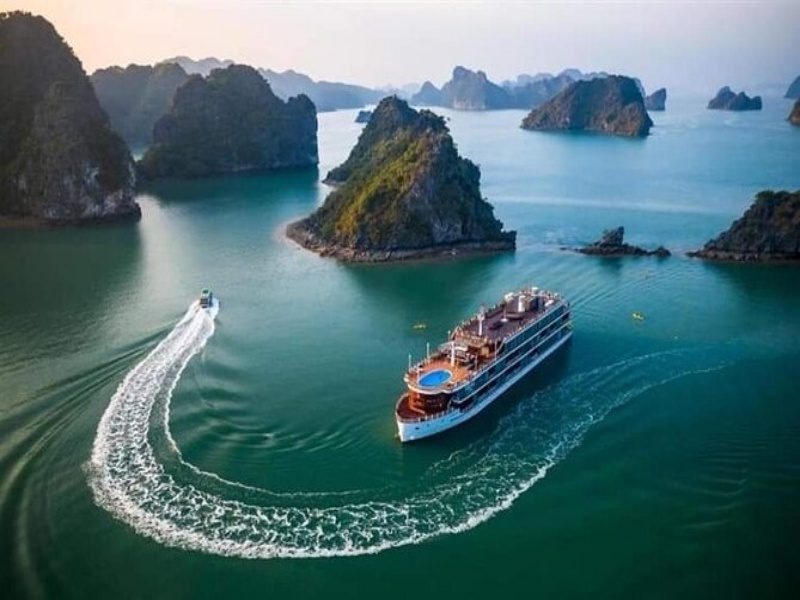
More than four hundred vessels navigate Ha Long Bay under permit, yet their movements follow a tightly managed timetable. Day cruises typically embark between eight and noon, returning by late afternoon to meet the 18:30 port curfew. Overnight junks and luxury liners depart mid-morning, allowing guests to settle in before the first karst formations come into view. The bay's dual embarkation hubs—Tuan Chau Marina and Hon Gai Wharf—process thousands of passengers each day during peak season. Cruise operators coordinate departure slots with port authorities to prevent bottlenecks, but the system strains between ten and noon when tour buses from Hanoi converge. Arriving at the port during the 06:30 to 09:00 window positions you ahead of this surge, shortening check-in queues and giving your vessel a clearer channel out of the harbor. Cruise schedules align with tidal cycles and designated anchorage zones. Day itineraries concentrate on southern karst clusters—Sung Sot Cave, Ti Top Island, Luon Cave—returning passengers by 17:00. Overnight routes push deeper into Bai Tu Long Bay or Lan Ha Bay, where vessels anchor in protected coves after sunset. Multi-day expeditions may include kayaking at dawn or early-morning tai chi on the sundeck, activities that depend on your ship's specific timetable rather than bay-wide regulations. Port operations pause outside the 06:30–18:30 window, a policy designed to protect nesting seabirds and reduce light pollution across the limestone archipelago. This means all vessels must return to dock by evening, though overnight cruises remain moored in designated bays until morning departure. The departure schedule you choose determines not just your route but the quality of light on the water, the density of surrounding traffic, and whether you witness the bay under the soft glow of early sun or the midday blaze.
“Cruise schedules align with tidal cycles and designated anchorage zones, determining both route and the quality of light on the water.”
Most day cruises follow a similar rhythm, departing between 08:00 and 09:00 and returning by late afternoon. The sequence below reflects how sailing distances between karst islands and activity stops shape the typical six-hour timeline.
Vessels leave Tuan Chau or Hon Gai harbors, with check-in and boarding completed by 08:30. Allow buffer time for port formalities.
The boat navigates between limestone pillars, covering roughly 15 kilometers of open bay. Deck access is usually open during this segment.
Most itineraries include a stop at Sung Sot Cave or Ti Top Island, with 30–40 minutes ashore for exploring or climbing viewpoints.
Meals are served while anchored or during slower transit. Dining occupies the main cabin for the hour.
Weather permitting, the vessel anchors near calm water for kayaking or a brief swim, typically lasting 40–50 minutes.
The cruise retraces its route, arriving back at the departure harbor by 17:00 or 17:30. Disembarkation takes another 15–20 minutes.
Everything you need to know about ha long bay cruise timings