
English| USD
Suggested for you
More currencies
Choose a language
Halong Bay cruises vary widely in price depending on duration, vessel quality, and itinerary inclusions. Understanding the cost structure helps you choose the right experience for your budget while avoiding hidden fees.
Quick answer
Ha Long Bay cruise cost depends on cruise type and duration. Budget day cruises start around $30–50 per person, mid-range overnight cruises run $80–150, and luxury two-night cruises can exceed $300 per person. These prices typically include meals and core activities but exclude the 290,000 VND entrance fee ($12 USD) payable at the bay itself. Costs rise during peak season and for premium cabin categories.
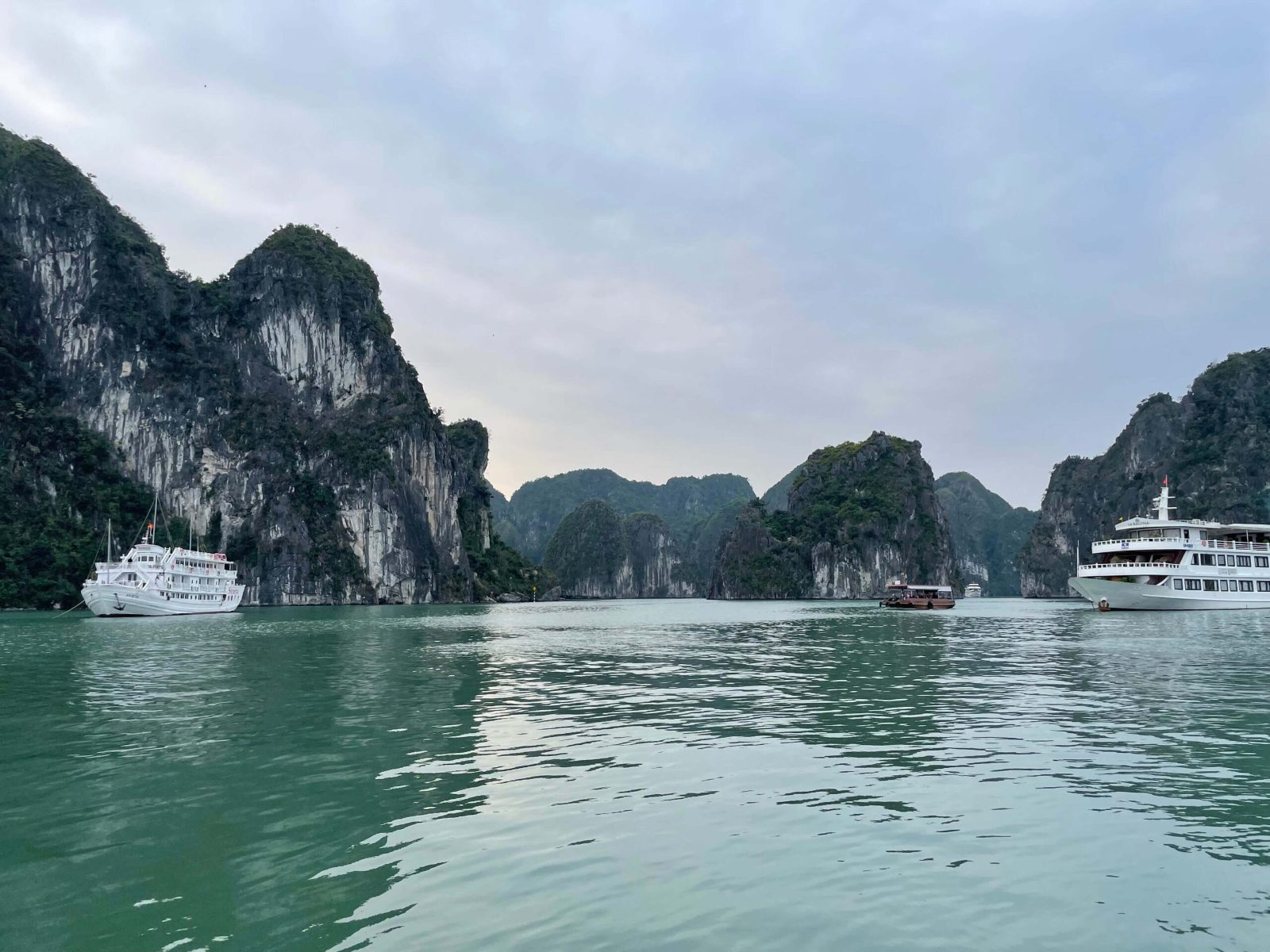
The limestone karsts rising from emerald water form one of Southeast Asia's most photographed seascapes, and the vessel you choose shapes both the view and the price tag. Cruise pricing in Halong Bay follows a predictable ladder: day cruises with shared dining and basic itineraries sit at the entry level, overnight junks with private cabins and guided kayaking occupy the middle tier, and boutique vessels with butler service and spa facilities command the premium bracket. Operators bundle different components into their rates. Most include round-trip transport from Hanoi, onboard meals prepared in galley kitchens, and access to activities like cave tours at Sung Sot or kayaking through floating villages. The bay entrance fee remains separate across all tiers—290,000 VND per person collected at the gate, regardless of your vessel's price point. Seasonal demand shifts the baseline: summer months and Vietnamese holidays push rates up by 20–30 percent, while shoulder months offer the best value without sacrificing weather quality. Duration defines cost more than any other variable. A six-hour day cruise keeps the price low but compresses the itinerary into a rushed loop. Overnight options spread activities across two days, adding sunrise on deck and evening squid fishing, while two-night luxury sailings venture deeper into Lan Ha Bay and Bai Tu Long zones where traffic thins. Cabin categories further segment pricing—dormitory-style bunks for backpackers, standard double cabins with en-suite facilities for couples, and suite-level accommodations with balconies and bathtubs for travelers prioritizing comfort. Hidden costs appear in optional add-ons: alcoholic beverages, spa treatments, seaplane transfers, and private dining setups carry surcharges not disclosed in base rates. Budget an extra 20–30 percent beyond the quoted cruise fare if you plan to indulge. Booking directly through operators sometimes yields better rates than third-party platforms, though package deals that combine cruises with Hanoi hotels can offer savings for first-time visitors managing multiple reservations. The trick is matching your budget to your priorities—whether that means maximizing time on the water, securing a quieter sailing route, or simply ensuring your cabin has a window that opens.
“Duration defines cost more than any other variable in Halong Bay cruise pricing.”
Ha Long Bay cruise pricing varies significantly depending on the vessel category, trip duration, and the specific amenities included. Visitors should account for both the base cruise rate and independent travel expenses to reach the departure point.
How to spend less
Verdict: Total expenditure typically ranges from 2,500,000 VND to 10,000,000 VND per person depending on luxury level and trip length.
This sample timeline assumes a two-day, one-night cruise—the most common format for balancing cost and experience. Day cruises condense activities into 6–8 hours, while three-day itineraries add remote karst exploration at higher price points.
Board at Tuan Chau Marina after the 07:00–10:00 arrival window; cabins are assigned and lunch is served as the vessel departs toward the limestone karsts.
Most operators schedule either Sung Sot Cave or kayaking around Ti Top Island; budget 90 minutes including transfer by tender boat.
Vessels anchor in a sheltered bay; this is when photographers capture the karst silhouettes and many cruises offer cooking demonstrations.
Multi-course dinner is included in all cruise fares; optional squid fishing or onboard movies follow until cabins close around 22:00.
Early risers join deck exercises; breakfast service runs until 08:00 while the boat repositions toward the final activity zone.
A second cave or floating village visit; vessels must return to dock by early afternoon, so this slot is shorter than Day 1 activities.
Settle any bar tabs and pack; brunch is served as the cruise returns to Tuan Chau, with disembarkation around 12:00.
Choosing when to visit Ha Long Bay significantly influences your total cruise expenditure and overall experience. Spring and autumn provide the most favorable balance of costs and climatic conditions.
Pleasant, 20°C–28°C; clear visibility
Expect higher rates and limited availability during these popular months.
Hot, humid, 30°C–35°C; storm risk
Lower cruise costs are common due to decreased demand and potential weather interruptions.
—
Arriving during the best arrival window of 07:00–10:00 ensures you avoid mid-day port congestion and stay on schedule.
Verdict: For the best balance of cost and conditions, plan your trip between Tuesday and Thursday during April or October, ensuring you arrive between 07:00–10:00.
Prepare these items in advance to avoid unexpected fees and ensure a smooth boarding process.
Everything you need to know about ha long bay cruise cost
The final price for your journey depends on the vessel category, the length of the itinerary, and the specific onboard services included. Travelers should also consider seasonal demand when calculating the total ha long bay cruise cost to ensure the best value.
While many all-inclusive packages exist, some individual excursions or premium beverage options may not be covered in your initial booking. Always verify the inclusions of your specific package to understand your total expenditure beyond the base ha long bay cruise cost.
To manage your Halong Bay travel expenses, monitor seasonal fluctuations and choose itineraries that match your desired level of comfort. Planning well in advance is a practical strategy to secure competitive rates for a typical limestone karst exploration.
Policies regarding fares for minors vary significantly between different boat operators, so check these details during the inquiry phase. Some companies offer tiered pricing based on age, which can impact the overall family travel budget significantly.
The most effective way to visit this protected maritime landscape is to prioritize operators that bundle essential taxes and port fees. By clarifying exactly what is covered, you can easily avoid unexpected expenses while experiencing the grandeur of the limestone pillars.